Awakenings

Glimpses of the Divine in the Mundane

There are many gifts that the church has been given.  One of these gifts is the gift of prophecy (see Romans 12:6).  Within the Adventist Christian tradition, most Adventists view Ellen White, one of the church’s founding leaders, as having the gift of prophecy.  This means that many Adventists believe that her writings were inspired by God.  Most Adventists believe that the messages and inspirations she received were sent from God for the people living during the “time of the end.”

Seeing that this debate of women’s ordination is a hot topic within the Adventist denomination right now, and seeing that many Adventists view Ellen White’s writings as being inspired by God, it would seem privy to see what she has to say on the subject.
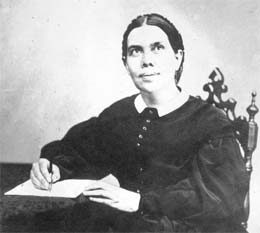
Ellen White

First of all, it is slightly ironic that many who argue that we are not to receive spiritual authority from a woman and believe it is unbiblical, have no issue at all receiving authoritative teaching from this woman – Ellen White – and this authoritative  teaching is received and utilized by reading and quoting her writings.  But that is beyond the point.  Ellen White has some very interesting things to say about women in ministry, especially since most of what she said was written in the late 1800’s and early 1900’s.

Included below are some of the most prominent quotes on the subject of women in ministry roles.  Just as we need to use good hermeneutic skills in the usage of reading and interpreting the Bible, the same is true of any source.  And so, with that being said, context is a huge element to take into account when understanding statements or quotes from authors.  When Ellen White uses the term “ministry”, she is either referring to canvassing ministry, medical ministry, or pastoral ministry.  All of the following quotes are only taken from the context of pastoral ministry.

On the topic of ordination, in her book Desire of Ages, Ellen White reiterates what the Bible already seems to reveal to us.  She writes,

All who receive the life of Christ are ordained to work for the salvation of their fellow man.”                                                        (Desire of Ages, page 822 – Emphasis mine).

In referring to the great need for women in preaching the truth, she writes,

“It was Mary that first preached a risen Jesus…if there were twenty women where now there is one, who would make this holy mission their cherished work, we should see many more converted to the truth.  The refining, softening influence of Christian women is needed in the great work of preaching the truth.”  (Evangelism, pg. 472).

In a blatant quote, where she writes about pastors also being involved in the canvassing work, she writes:

“It is the accompaniment of the Holy Spirit of God that prepares workers, both men and women, to become pastors to the flock of God.”   (Testimonies Volume 6, pg. 322)

Ellen White also encouraged the need for men and women to work together in gospel ministry:

“When a great and decisive work is to be done, God chooses men and women to do this work, and it will feel the loss if the talents of both are not combined.”   (Evangelism, pg. 469)

As in the case of families, Ellen White was a mother of 5 children and was still a minister and leader, showing us that it is possible to minister to others and still be a mother.  She exhorts the church to not judge mothers who want to be involved in ministry:

Seventh-day Adventists are not in any way to belittle woman’s work. If a woman puts
her housework in the hands of a faithful, prudent helper, and leaves her children in
good care, while she engages in the work, the conference should have wisdom to
understand the justice of her receiving wages.  (Manuscript Releases 5, pg. 324)

 However, she also writes that perhaps some women were not meant to be mothers, but rather would be better fitted as ministers:

 “The way is open for consecrated women.  But the enemy would be pleased to have the women whom God could use to help hundreds, binding up their time and strength on one helpless little mortal, that requires constant care and attention.” (Manuscript Releases Volume 5, pg. 325)

In reference to those who may feel women pastors are not fulfilling their unique feminine roles, check out this quote:

Woman, if she wisely improves her time and her faculties, relying upon God for wisdom and strength, may stand on an equality with her husband as adviser, counselor, companion, and co-worker, and yet lose none of her womanly grace or modesty. She may elevate her own character, and just as she does this she is elevating and ennobling the characters of her family, and exerting a powerful though unconscious influence upon others around her. Why should not women cultivate the intellect? Why should they not answer the purpose of God in their existence? Why may they not understand their own powers, and realizing that these powers are given of God, strive to make use of them to the fullest extent in doing good to others, in advancing the work of reform, of truth and real goodness in the world? Satan knows that women have a power of influence for good or for evil; therefore he seeks to enlist them in his cause.  — Good Health, June, 1880.

In writing about the importance of women being paid equally with that of men, she writes:

 “Injustice has sometimes been done to women who labor just as devotedly as their husbands, and who are recognized by God as being necessary to the work of the ministry.  The method of paying men laborers, and not paying their wives who share their labors with them is a plan not according to the Lord’s order, and if carried out in our conferences, is liable to discourage our sisters from qualifying themselves for the work they should engage in.(Manuscript Releases Volume 5, pg. 325).

She also states in the book Evangelism:

 “The tithe should go to those who labor in word and doctrine, be they men or women.” (Evangelism, pg. 492)

Ellen White wrote to a member of a church who was saying horrible things about some women who were leaders in the church.  In the letter, she notes that is it not gender, but character that determines fitness for church leadership:

 “It is not always men who are best adapted to the successful management of a church.  If faithful women have more deep piety and true devotion than men, they could indeed by their prayers and labors do more than men who are unconsecrated in heart and life.”  (Manuscript Releases Volume 19, pg. 55-56)

The one known place that Ellen White recommends ordination for women is:

“Women who are willing to consecrate some of their time to the service of the Lord should be appointed to visit the sick, look after the young, an minister to the necessities of the poor.  They should be set apart to this work by prayer and laying on of  hands.  In some cases, they will need to counsel with the church officers ro the minister; but if they are devoted women, maintaining a vital connection with God, they will be power for good in the church.  This is another means of strengthening and building up the church.  We need to branch out more in our methods of labor.  Not a hand should be bound, not a soul discouraged, not a voice should be hushed; let every individual labor, privately or publicly, to help forward this grand work.”  (The Review and Herald, July 9, 1895)

It’s interesting that Ellen White doesn’t speak very specifically about “Ordination.”  And that brings me back to a question from my earlier blog:  where did we get the idea of Ordination?  Could it be that the way we do it is not even Biblical?  What if, as Ellen White writes above from Desire of Ages, ALL are ordained, and ordained by Christ alone and His Spirit!  What if this whole discussion is all a waste of time, bickering like children over who is best or who needs to be picked.  It’s like fighting over who gets the best seat in the family vehicle,  when in reality, it doesn’t really matter because we’re all going on the same trip, and God is in the driver’s seat!  I will deal with this question, ordination, in more detail in my final blog, but I do want to include this killer quote from Ellen White in her book Acts of the Apostles.  Check this out:

“Their (Paul and Barnabas) ordination was a public recognition of their divine appointment to bear to the Gentiles the glad tidings of the gospel.  Both Paul and Barnabas had already received their commission from God Himself, and the ceremony of the laying on of hands added no new grace or virtual qualification. It was an acknowledged form of designation to an appointed office and a recognition of one’s authority in that office. By it the seal of the church was set upon the work of God…At a later date the rite of ordination by the laying on of hands was greatly abused; unwarrantable importance was attached to the act, as if a power came at once upon those who received such ordination, which immediately qualified them for any and all ministerial work. But in the setting apart of these two apostles, there is no record indicating that any virtue was imparted by the mere act of laying on of hands. (Acts of the Apostles, pg. 162  Emphasis added)

So it is clear, according to the above statement, that ordination is merely a human recognition of something that God is ALREADY doing in a person.  So what gives us the right to say who we will or won’t “ordain” when God has already done the ordaining?  Perhaps we really, instead of talking about who should and should not be ordained, should be discussing our whole practice of ordination in general and whether or not it’s even Biblical.  In fact, what if ALL people were considered commissioned ministers already, and God is using them regardless of whether or not human hands are placed on them?  It seems to be the case, according the the Great Commission in Matthew 28:18-20 and Ephesians 1:21-23).   God is the One will ALL AUTHORITY, and He is the Head, and we ALL, regardless of gender, are under Him.  The very fact that He can use us at all, in all our brokenness, is truly miraculous.

In closing, Ellen White was a leader beyond her time.  She faced opposition herself for following her calling from God.  She writes about an experience where her brother did not want her to be a female preacher.  He wrote to her imploring, “I beg of you, do not disgrace the family.  I will do anything for you if you will not go out as a preacher.”  Ellen White wrote back, “Can it disgrace the family for me to preach Christ and Him crucified?  If you would give me all the gold your house could hold, I would not cease giving my testimony for God.”  (Signs of the Times, 24 June, 1889, 2, emphases added).

NOTE:  For more info, check out this article entitled “A Power That Exceeds That of Men”: Ellen G. White on Women in Ministry“, which is chapter 10 from the book, Women in Ministry, Special Committee, SDA Theological Seminary.

Recently I attended a meeting where the subject of Women’s Ordination came up for discussion.  There I was, sitting in a church, listening to people’s views and opinions on this hot topic.  What made this circumstance different was the fact that this meeting was being held in my childhood home church – the church I grew up in from age 2 until I left for college.  This was the church I sat in with my family, in the 2nd row from the front, hearing sermons and singing praise songs.  This was the church I grew up in, starting out as a restless toddler, growing into a gangly 11-year old, and then on to an awkward Junior-Higher, to a happy-go-lucky teenager, and finally maturing into a young woman.  This was the church I was baptized in.  This was the church I met Jesus in through our youth group. This was the church who helped sponsor me through academy and on mission trips as a highschool student.  This was the church I was married in.   And here I was, ironically sitting in the same row I had sat in for years as a child, hearing people’s view on women’s “true” role in ministry.  It’s not like these types of conversations are new for me.  But this time, with the nostalgia of my child-hood faith-experience surrounding me, it just felt a little more personal.  And I have to admit that it hurt a bit to hear the applause of parts of the congregation when someone spoke against women in ministry.  Even though I know it’s not the case, it felt like it was applause against me.  It was surreal to sit there, in that same row, in my child-hood church, and hear the views from both sides, and know that they were, proverbially, referring to me.

Towards the end of my Senior year in college, the head of the Religion Department gave me a special homework assignment.  At the time I didn’t understand why I was so “special” in having to do this extra research paper.  But now I am so glad that I did.  It has proved to be beneficial for me personally many times.  They say that knowledge is power – and in my circumstance, because of my wise professor, this has been true for me.

I pulled out that paper that my professor made me write 14 years ago, and it encouraged me.  But it also made me realize that we as a church don’t understand ordination.  I have not said much about this topic for so long because I know that some people may hear me and put me in the box of being a “feminist” or a “liberal.”  However, I have also come to the place that I feel it’s important to state what I believe and why I believe it. I’ve also met many young women who feel called by God, but become scared or discouraged to follow-through with that calling for fear of going against God’s will or the church’s opinion.  It hurts to see the church fighting so much when we should be doing more with our time and talents to help those around us.  And so, because of these reasons, I will be sharing my thoughts on this topic of ordination.  I will be sharing what my research revealed to me years ago and what it still reveals to me.  Following are the concepts from my research paper as well as other “findings” I’ve had since then.  I will include it in a 3-part blog.  This first part will be focusing on the Biblical side of things.  The 2nd part will focus on the subject from the Spirit-of-Prophecy point of view.  And finally, the 3rd part will look at the topic from the historical side of things.  Here we go!

Women in Ministry – Biblical Truth or Mortal Opinion?

There are not very many topics that have been argued over or stressed through for over a 100 years than the topic of women pastors, or more particularly, the ordaining of women.  It is the purpose of this research paper to take a look into the arguments concerning women’s ordination and see the historical, biblical, and spirit-of-prophecy points of view regarding this subject.  It is not the purpose of this essay to flaunt feminism or victimization in regards to women’s ordination.  Nor is it my intent to cause controversy in any way. Rather, it is the intentions of this research to find the will of God on this subject.

Popular Arguments – The Priest

One of the biggest arguments against the ordaining of women from a biblical perspective is that there were no female priests mentioned in the Old Testament.  And this is quite true.  There were, however, female judges (Judges 4:5), prophetesses (Judges 4:5), and a group of women known as the wise women of Israel (2 Samuel 20:16).  In using good Bible hermeneutics, we must take the entire Bible into account when looking at a subject.  Therefore, we must also look at the New Testament and its reference to priests and high priests.  We all know that the priests and high priests in the Old Testament were a symbol or type for Christ, our true High Priest.  We know this from many Biblical references such as (1) Hebrews 4:14 where it says “So then, since we have a great High Priest who has entered heaven, Jesus the Son of God, let us hold firmly to what we believe.”  (2) Hebrews 8:1, 6-13 which says,

“Here is the main point: We have a High Priest who sat down in the place of honor beside the throne of the majestic God in heaven…But now Jesus, our High Priest, has been given a ministry that is far superior to the old priesthood, for he is the one who mediates for us a far better covenant with God, based on better promises. If the first covenant had been faultless, there would have been no need for a second covenant to replace it. But when God found fault with the people, he said, 

“The day is coming, says the Lord,
    when I will make a new covenant
    with the people of Israel and Judah.
   This covenant will not be like the one
    I made with their ancestors
when I took them by the hand
    and led them out of the land of Egypt…”

 When God speaks of a “new” covenant, it means he has made the first one obsolete. It is now out of date and will soon disappear.”

So we see that Christ is the High Priest and under the New Covenant we don’t need human priests because we have the real One, Jesus Christ who ministers for us.  In fact, under this New Covenant with Christ as the High Priest, we are all under Christ and all of us are now called “kings and priests” under this new Covenant.  (“…and hath made us kings and priests unto God and his Father; to him be glory and dominion for ever and ever. Amen.” Revelation 1:5, 6; we are all made kings and priests because of the blood of the Lamb –Revelation 5:9, 10; and we ALL are called to be part of the royal priests and God’s holy nation – 1 Peter 1:9) .

Finally, in regards to the arguments of priests being a type (symbol) for pastors, we would have to take into account all the qualifications for a priest mentioned in the Old Testament.  Not only is there a qualification for the priest to be male, but he also must be without any physical blemish, can’t have any broken bones, can’t have a hunchback, can’t marry a widow or a woman who is divorced, and has to be of the lineage of Aaron. (Leviticus 21:10-23; Exodus 29:9).  If these qualifications are listed in the same context as being male, why are we not demanding that all of these qualifications be used when choosing pastors who are to be ordained?  As good Bible scholars, we can’t pick and choose which qualifications we will respect and leave out others.  When was the last time you heard of an ordination committee checking out to see if the candidate was not only male, but also from the genetic line of Aaron, and without any physical deformity?  Obviously it doesn’t happen, because we know that Aaron and the high priests from the Old Testament were a symbol for Christ, who is the literal unblemished High Priest for our church.  Therefore, the argument regarding priests is not a good argument to use for why women cannot be ordained.

In closing, Paul makes a strong statement in Galatians 3:28.  Paul, who had been educated as a Pharisee, had most likely prayed the Pharisees prayer of “Lord, I am thankful that I was not born a Greek, or a slave, …or a woman.”  However, after Paul’s conversion experience in coming to Christ and being under the New Covenant, he states his new ideology in Galatians 3:28: “There is neither Jew nor Greek, there is neither slave nor free, there is neither male nor female; for you are all one in Christ Jesus.”

Popular Arguments – The Husband as The Head

Now that Christ has come and He is our High Priest, who is the high priest of the Church?  Many people answer that the pastor is.  However, this is wrong.  As we’ve already seen from Scripture, Christ is the High Priest of His church.  But He’s also known as the Husband of His church.  This  brings up the next argument that is used as to why women cannot be pastors or be ordained.

There are those who use the argument of the difference between male and female roles.  They argue that since man, or the husband, is the head of the home, women cannot be pastors of the church.  There is a huge misinterpretation of Scripture used in this idea.  In using the statement that because the husband is the head of the wife, only men can be the pastors or leaders of the church, there is an inference being made that the pastor is the head of the church.  But this is blatantly wrong according to the Bible, as seen from the following references.

First of all, the Bible reference that many use for this line of thinking is from the popular passage of Ephesians 5 where we are admonished to submit to one another out of reverence for Christ.  The next verse then tells wives to submit to their husbands because the husband is the head of his wife.  People who use this passage as proof that women should not be pastors are greatly mistaken, mostly because they stop right there in the passage.  But that is not where the verse stops!  Here is the entire passage in its context:

 “For wives, this means submit to your husbands as to the Lord.  For a husband is the head of his wife just as Christ is the head of the church. He is the Savior of his body, the church. As the church submits to Christ, so you wives should submit to your husbands in everything.”  (Ephesians 5:22-24 Emphasis mine).

Right there in the context of this verse it blatantly states that Christ is the head of the church, not the woman or the man.  Christ is the husband, and therefore we all are His bride.  Here it is evident that the pastor is NOT the head of the Church.  Christ is!  Therefore there must be a distinction between the home and the church.  The husband is the head of his home.  But men are not the head of the church – nor are women.   Only Christ is!

There are other references to Christ being the head of His church, as well as the Husband:  (1)  In Ephesians 4:15 it states “Instead, we will speak the truth in love, growing in every way more and more like Christ, who is the head of his body, the church.”  The context of this statement is after Paul is talking about gifts given to the church – “Now these are the gifts Christ gave to the church: the apostles, the prophets, the evangelists, and the pastors and teachers. Their responsibility is to equip God’s people to do his work and build up the church, the body of Christ.”  (Ephesians 4:11, 12).  (By the way, this is the only Biblical reference that uses the word “pastor” and it is in the same usage as the word “teacher.”  Perhaps we have elevated the status of a pastor to a place that it was never meant to be elevated to, which, in turn, has put our eyes on a human being instead of on the true head of the church, Jesus Christ.)  We also see similar texts that blatantly state Christ as the head of the Church in Colossians 1:18 and Colossians 2:10.  (2) In Romans 12 and 1 Corinthians 12 we see more detail in who we are as Christ’s body, under His headship.  We are not the head – only Christ is.  (3) We (the church, both men and women) are known as His bride.  In 2 Corinthians 11:2 we are called to be a pure bride to one husband who is Christ.  In Revelation 19:7 it talks about Jesus, the Lamb, coming to get His bride, the church, who has prepared herself for Him.  This, once again, is referring to His Church, or Bride, which consists of both men and women.  He is the husband, or the head.  (4) In prophecy, we know that the Church of God is represented as a woman (Revelation 12:1).  To deny this is to go against Scripture.    Therefore, it is not hermenuenical to use this argument – man being the head of the woman – as a proof that only men can be pastors or leaders or ordained.  Because as we see from Scripture, only Christ is the head of the church.

As we see what the Bible says, it’s clear that the church and the home are two completely different organizations. In the home we do have the different roles of wife and husband.  And in the church we have the Head/Husband of the church being Christ, and we have the woman/bride of Christ being all of us, both men and women.  And to have the clear picture of God’s character, which takes both men and women to reveal (we were both, with our different roles, made in the image of God – Genesis 1:27) we need both men and women as leaders in the church.

Popular Arguments – Who has Authority?

Another popular argument against women pastors and the ordination of women is the one that states that women are not to have authority over a man, or to teach, but are to learn in silence.  The Scriptural reference that is used comes from 1 Timothy 2:11-15  which states:

“Women should learn quietly and submissively. I do not let women teach men or have authority over them.  Let them listen quietly. For God made Adam first, and afterward he made Eve.  And it was not Adam who was deceived by Satan. The woman was deceived, and sin was the result. But women will be saved through childbearing, assuming they continue to live in faith, love, holiness, and modesty.”

At first this verse seems pretty blatant that women should not hold any type of leadership in the church.  However, it is wise to remember context when studying any particular passage.  One of the most important types of contextual studies is to look at primarily who the book, or in this case, the letter is written to, and what kinds of circumstances were abounding to that particular time and location.  It’s also important to take all of Scripture into account when looking at a specific topic.

There are many ideas and interpretations in regards to this passage.  One thing to note right away is the greek word for woman in this passage.  The word is “gune”, which being interpreted means “woman – specifically a wife.” (Strong’s Concordance).  It appears this is not referring to women in general, but specifically to wives.  Could it be that Paul is referring to the marriage relationship, and particularly to a situation that was happening in the church he was writing the letter to?  We must be very careful not to universalize a message that was meant for a particular situation, and make it for any and all situations.

There are many scholars who have said that Paul is referring to a distinct church situation pertaining to a special circumstance in regards to the place that this letter is written.  This seems to carry much weight, especially due to the fact that elsewhere Paul mentions women in spiritual leadership roles with very strong support.  Some of these references are in the following places: (1) In Philippians 4:3 Paul refers to 2 women who “worked hard with me in telling others the Good News. They worked along with Clement and the rest of my co-workers, whose names are written in the Book of Life.”  (2) In Romans 16, verse 1, Paul mentions Phoebe who is a deaconess in the church and who has been helpful to many; in verse 3 of the same chapter and book, Paul mentions Priscilla as one of his co-workers in the ministry of Christ. She is also mentioned in Acts 18:26 when she is mentioned as instructing Apollos in his preaching; in verse 7 of Romans 16, Paul mentions Junia, who is a highly respected female apostle who was a follower of Christ before he (Paul) was; in verse 12 we hear about Tryphena and Tryphosa, who labor for the Lord, as well as Persis, who worked hard as a leader for the Lord.  (3) In Acts 21:8, 9 we hear about Philip the Evangelist’s 4 daughters who had the gift of prophecy.  (4) In Luke 2:36-38 we learn of Anna the prophetess, who spoke (taught) everyone she came across about Jesus the Messiah. (5) In 2 Chronicles 34:22-28 we learn of Huldah who consulted (or taught/admonished) the people of God instead of Jeremiah.  (6)  As a creative side-note, in Matthew 28:5-10, the women are the ones who first notice the empty tomb of Jesus.  They are instructed by an angel of God to“… go quickly and tell his disciples that he has risen from the dead, and he is going ahead of you to Galilee. You will see him there. Remember what I have told you.”  As these women are going to tell the other disciples, they meet Jesus who also tells them, ““Don’t be afraid! Go tell my brothers to leave for Galilee, and they will see me there.”  If it was against God’s will for women to speak and teach others, including men, why would an angel from heaven, and then Jesus Himself, tell them to do exactly that?  This verse is a great references from the Bible that shows us that God is not a respecter of persons, but calls all to speak for Him.  In fact, in Mark 16:14, Jesus later appeared to the rest of the disciples and rebuked them because they did not believe the testimony of the women.

So with this overwhelming evidence of women who were in positions of authority to teach others, mostly given from Paul’s other letters, it seems to reason that this passage from 1 Timothy 2 is referring to special case that was happening in that church.  Otherwise it would appear that Paul is contradicting himself, especially since we have so many examples of women who were co-laborers and leaders in the early church.

As to the question of who has authority in the church, we seem to forget one of the greatest Bible verses of all time:  Matthew 28: 18-20 which states,

“Jesus came and told his disciples, “I have been given all authority in heaven and on earth. Therefore, go and make disciples of all the nations, baptizing them in the name of the Father and the Son and the Holy Spirit.  Teach these new disciples to obey all the commands I have given you. And be sure of this: I am with you always, even to the end of the age.”  (emphasis added)

It is obvious, then, that the question of authority does not come from humans, be they men or women.  It is blatantly clear that Christ has all authority, not only in heaven, but also in earth, and it is because of this authority that He commissions ALL OF US to go, make disciples of all nations, baptize, and teach.  This command comes straight from the mouth of Jesus.  He is the One with all authority.  He is the Head of the Church.  He is the Great High Priest.  He is the Husband.  And the ground is level at the foot of Him Who is lifted up.  We, both men and women, are on level ground.  And He is the only One to whom we raise our heads, our hands and our prayers to.  He is the One with ALL AUTHORITY.  For any human to claim to have this authority is to make ourself equal with Christ, and we know that to do that would be blasphemy.

Finally, as the Bible mentions, we know that God’s Spirit can use anyone – as Joel 2:28 and Acts 2:17 remind us,

“‘In the last days,’ God says,
‘I will pour out my Spirit upon all people.
Your sons and daughters will prophesy.
Your young men will see visions,
and your old men will dream dreams.”

This word, “prophecy”, in Hebrew is Naba, which means to “speak to others (dare we say preach/teach) by inspiration through predictions or simple discourse.”  In the Greek translation from Acts 2, the Greek word used is Propheteuo, which means “to foretell events, divine, and/or speak under inspiration” (Strong’s Concordance).  It’s very interesting that the Bible makes a blatant inclusive reference to women in these verses by mentioning “daughters”.  Thus, we see once more, that God is inclusive and uses all of us, regardless of gender.  Check out more a more in-depth look at this by clicking  HERE.

After seeing what the Bible says, it gives overwhelming support and evidence that God is the One who “ordains” and commissions, not man. (By the way, there is no Biblical reference to “ordination” in the way we do it today…but that’s coming in a later post!)   Perhaps it is high time that we stop looking at each other and bickering about who is the greatest, and instead recognize that the ground is level at the foot of the cross.  The only One lifted up is Jesus Christ.  And when our eyes are looking up at Him, we’ll start to put our energies towards being His body to a world in need of love, grace and healing.  May we stop our bickering and remember that ALL AUTHORITY has already been given to Him, that He has commissioned ALL of us, and most importantly, He is the One who is to be praised.

(For an excellent breakdown of some verses regarding women in ministry, also check out this video from Ron Du Preez):

This song, written by 2 students of mine, was the perfect song for me today.  May is a crazy month, and so many of us run around doing so many things – great things – but our souls get tired and the sacred place inside us gets put on hold as we perform to the expectations of everyone, including ourselves.  Activity becomes our identity.  Busy becomes our pulse.  Rushing becomes our significance.  Until we don’t know who we are anymore.  The essence of the miracle of our uniqueness is lost in all the madness.

So there I was, sitting in the early morning of today, sipping my coffee and preparing for our Canoe Trip day.  Canoe trip is where we take all our students on the river and paddle about 11 miles.  The trip is beautiful, but can at times seem treacherous or scary as the current picks up around sharp corners.  But then there are other parts of the trip that are serene, as the water slows down, and the hills of Sonoma county cascade up on either side of the river.  It’s all in how you choose to take the journey – either with fierce paddle strokes to get to the end goal, or slowing down and experiencing the miracle of each moment.

And so, before I left for the trip today, I listened to this song, and it prepared me for my journey down the river – because it reminded me to see each moment as a holy moment.  So we loaded the buses and slathered on sunscreen and yelled out directions at kids and all got into canoes or kayaks, and began our journey.   I got in my kayak and decided ahead of time that I would enjoy the process of the trip.  And I did.  For me the time consisted in meandering down the river corridors; watching a dragonfly land on my knee; feeling the cool substance of the water in my palm; basking in the sun as it smiled upon us; enjoying conversations here and there with other water travelers; watching turtles as they were sunning themselves on a rock or log, reminding me that it’s ok to slow down sometimes and just sit in the beauty of our surroundings; splashing in the water with summer-hungry teenagers; and in the calm parts of the river, when it was just me, the water and the sky, I just stopped and listened and gave my soul permission to hush and be still.   The wind in the trees and the singing flow of the river reminded my soul to stop and breathe.  We need to practice “hush moments” more often.  We need to give our souls permission to rest.  And no one can do this except us.

At the end of the journey today, I’m a little sunburnt, but my soul feels better than it did last night.  The river today taught me a lot.  The water will always run.  Life will happen, but it’s up to me on how I will live it.  Will I open my eyes to see the beauty that surrounds me, or will I be so overcome with getting to the end of the trip that I sweep past everything that makes the trip worth it?  Cuz at the end of our journey today, the stories weren’t based on who arrived first.  The stories were all about what happened in the process of the journey itself.  May we not get to the end of the journey of life and realize that we missed it.  Hush.  Be still.  There is beauty and sacredness around you – even in the seemingly mundane places.  Stop for a minute – open the eyes of your soul – do you see it?

Here’s the song that helped inspire my day:

To download the song “This Morning” or hear more from Featherweight, click here:  http://www.reverbnation.com/furtherwieght

It’s 3am.  Most of the human race is fast asleep.  But in some corners of the globe there are those who do not sleep.  They are the vigilantes for “truth and righteousness”, who hunt down all things that hint of sin and heresy and expose the evils to the world.  They pride themselves in their Bible knowledge and defend their scathing rebukes as being those of modern-day prophets standing up as God’s servants, defending truth and keeping God’s church pure and undefiled.  But does it actually work?  Does God need our defending, especially in the way a lot of people do it?    And could this type of behavior be a form of addiction – people getting “high” off the adrenaline that comes when the controversy gets out of hand and they are forced to defend their position using Scripture – forced to stand for the right, though the heavens (or hearts of others) fall?

First off, I want to mention how sad this whole thing makes me.  I have seen so many people be hurt by “saints” who are convicted to tell everyone how sinful they are, how unrighteous their decisions are, and how their footsteps are headed to hell.  It’s interesting, because in some cases, these vigilantes use the internet to spread their ideas and warnings to the online flock of God.  Many of these websites or postings only include a part of the story or have a very slanted view on a specific topic and can seem as a form of propaganda, all in defense of “truth” and “righteousness.”  I would even go so far in saying that a lot of this behavior, especially the websites and online posting, borders on a type of cyber-bullying.  There is no Matthew 18 principle being used, just an article that is typed up, a “sin” that is called out, and a swift tap of the “enter” key is pressed.  And this is really God’s work??  It sounds more like bullying to me.

In case some of you are wondering, what is the “Matthew 18 Principle”?  In the Bible, (specifically Matthew 18:15-20) Jesus gives instructions about how to deal with conflict, someone who has wronged you in some way, or someone who has sinned against you.  There are four possible steps involved:  The first step is to go privately to the person and dialogue with them about the issue – just the two of you.  And you do it in the spirit of wanting to resolve the conflict.  The repairing of the relationship is foremost.  If that does not work, then you try the second step – you go again, this time bringing a witness with you, to keep the conversation from getting too heated.  This witness needs to be someone who is neutral to the situation, but who is in favor of establishing a peaceful resolution under the Spirit of God.  If that doesn’t work, the third step is to get the “church”  involved – meaning, maybe a spiritual leader in the church is made aware of it to help solve the conflict.  Maybe it means you ask for special prayer in a situation.  Always the intent in each step is to win the person back – to avoid drama, conflict or the creating of walls.  Finally, if the person still won’t be in favor of resolving the conflict or turning from sin, then you take the fourth step – you treat them as a pagan and tax collector.  Now at first this final step sounds harsh, but in reality it’s not.  Because remember this is coming from Jesus.  How did He treat pagans and tax-collectors?  He hung out with them (Matthew 11:19).  He loved them and was constantly drawing them towards Himself.  So if the first 3 steps don’t work, you don’t abandon someone – you treat them like Christ treated them – with LOVE, dignity and respect.

When it comes to the way most people deal with conflict or sin or other “evils of these last days”, they don’t usually use The Matthew 18 Principle at all.  Usually an article is written.  Or a sermon is preached. Or a post is made.  Or a website is updated.  Or conversations take place about the person or situation, but not in their presence.  In some extreme cases, someone may even wake up one morning to find their name blasted all over the internet, as if it were a gossip column, with accusations of being a sinner, or a “liberal” or a “conservative”, or of not following “the truth”, and therefore disappointing God and His Church.  These kinds of accusations can be very hurtful, and I would even argue that they do not represent the character of God, especially seen in how God Himself tells us how to deal with controversy.  (By the way, I find it very interesting that in the context of Matthew 18 we find the famously quoted verse that says “For where two or three gather in my name, there am I with them.”  (Matthew 18:20).  Could it be that revival and reformation is not falling on our churches because the very grounds for the promise of Christ’s presence being with us is in the context of those two or three gathering to make things right among themselves?  That as we come together, and lay aside our pride, and long to win back each other into unity, that this is where God’s Spirit is, and not in creating controversy).

But I do believe that this whole thing is an addiction.  Too many people are in love with controversy.  There is an excitement and “high” that comes when any kind of drama is present.  And if we can hide it under the guise of “defending God”, it’s even better.  Why?  Because now there is a pulpit that has been created for me to be heard, and it’s even more intense in the online world.  It’s safe.  It’s like creating another identity.  I can hide behind the safety of my computer screen, and say all sorts of scathing rebukes, and get touted for being so righteous in this end time world.  I don’t have to see the pain on people’s faces as they are hurt by my words.  And then I get to defend my point using Scripture, and see what objections I will get to that, and then retaliate using more Scripture.  And before you know it, hours have passed, with me sitting on my butt defending the “truth of God”, getting dose-after-dose of adrenaline as the skeptics and pagans of the world argue with me.  And then, if I “win” the battle of words and texts, I celebrate…alone.  And if the controversy gets long-winded, and I have to go to work, or go on errands, all that consumes my mind is what is being said or typed – what are “they” saying that I must defend?  But wait!  I have an iPhone!  I can check my updates and posts and stay abreast everything that is happening.  And so people are sucked into the reality of the online world of tirades and defenses, all in the name of truth and righteousness, while they may be passing by the very ones God wants them to save.  But alas their head is buried in their smartphone or laptop, so that they can defend God and His truth…while meanwhile a world is dying for want of Jesus with skin on.  And the addiction continues.

When it comes to defending the character of God, I think some of us take it way too far.  Does God really need us to bully each other in His name?  Is His Spirit so crippled that we must try to be that Spirit and be omnipresent, all for the sake of vindicating His character?  Could it be we go overboard, not meaning to?  I’m not saying we never stand up for the right thing or stand up for truth and justice.  What I’m talking about is when people don’t follow Matthew 18 and become so consumed with defending truth that they have to constantly hunt down new stories, articles and examples of people or things that are not “godly.”  And then this, in turn, consumes their lives, and addiction to controversy follows. I would say, God has asked us to be His body of love, grace, mercy and justice to a world in need.  He doesn’t need us to be omnipresent – He’s got that covered.  He needs us to be present in the places He’s placed us in – to be open to bringing love to a world that is consumed in darkness and controversy.  We don’t need to add more darkness and controversy to a world that is already steeped in it.  God tells us that the world will know we are His followers by our love (John 13:35).  He also calls His followers Children of Light, and not of Darkness, so therefore walk in the light (Ephesians 5:8).  And He says that genuine religion in the sight of God is caring for widows and orphans, and keeping yourself from being corrupted (James 1:27).

Finally, it is a very dangerous thing to claim to be a follower of God and be consumed with accusing people of wrong-doing, especially while neglecting Matthew 18.  The reference that is used in the Bible for accusing others is referring to the Devil.  It says in Revelation 12:10 that the devil, Satan, is known as the accuser of the brethren, who accuses them before God day and night.  So we must be very careful when we accuse others, even in the name of God, because we may actually be acting more like the Devil in doing so.  Notice that the verse in Revelation says that the devil accuses people before God.  When we look at a reference in Zechariah 3, the story is told of Joshua, a priest, who stands before the Lord and Satan is standing at Joshua’s right hand accusing him to God.  But then God rebukes Satan and tells him that Joshua is chosen and is a stick that has been snatched from the fire.  He then puts clean fresh clothes on Joshua and says “see, I have taken away your sins.”  So to be like Christ, it seems, is not to accuse others, but to look for ways of snatching them from the fires that try to take them down, and clothing them with love and kindness and grace.

May we be filled with LOVE in all things. May we work to build bridges and not create walls.  Like the old hymn reminds us, may our time be spent in turning our eyes upon Jesus… and as we see Him more and more, we can’t help but reflect that love to others.  May our efforts be consumed in being the body of Christ to the corners of the world we find ourselves in – being grace, love, mercy and justice to every human brother and sister we encounter.  And lastly, may we not get caught in the trap of addiction to controversy!

Where do we get the idea that tears are a sign of weakness?  Who was the first person to come up with the ridiculous statement that says “real men don’t cry”?  At what point do some of us feel ashamed of showing our vulnerability by revealing our tears?  I encountered a moment awhile ago where I felt the pain from another family member about a situation that both of us shared, and the pain we felt about that situation.  It was a pain about a situation that none of us could control, but that all of us felt the effects of.  As I said goodbye to this person, I felt the tears welling up.  This other person sensed the tears too, and we joked and laughed until we had parted ways.  A part of me wanted to put the tears on hold – to put them in a compartment and save them for another day, but another part of me realized that if I didn’t let those tears express themselves, that they would harden me into a non-human being.  And so I let them out, the trickle weaving a warm stream down my face.  Even in that moment, I wanted to hide my face.  I wanted to appear strong.  But I could feel the relief of the tears as I let them be felt, let them be heard, and gave them permission to express the pain so that healing can occur.

Tears are funny, when you think about them.  They are so tiny, yet their presence is so potently powerful that they can command silence, cause anger, awaken empathy, or trigger other tears to be released.  Have you ever been in an audience and someone is up to speak, and they begin to cry, and the room just suddenly feels different?  A lot of people get very uncomfortable in this situation, but it’s raw and real and vulnerable. It’s like you can feel the emotion itself, rather than someone describing it.  The room gets silent and the tears command our ears to listen.

I’m not a big crier, except when I laugh.  When I’m having a really good laugh, I know it’s good when tears are streaming down my face.  Not tears of sadness, but tears of hilarity!  When my stomach hurts, and my shoulders are shaking and my cheeks glisten, and I can’t breath, I know it’s a true moment of abandoned humor.  It’s funny how those kinds of tears don’t carry any shame (unless you’re in an “inappropriate place” when you get the funnies).  But crying is on another level.    Movies are the worst.  I remember being on a flight, in a seat between two other passengers that I didn’t know, and I decided to watch the movie, Marley and Me.  Great movie. Lots of laughter – especially if you own a dog.  But then, also, lots of tears.  So there I am, wedged between 2 strangers, feeling vulnerable and exposed as tears are welling up in my eyes, and then trickling down my face.  I felt embarrassed, but why should I?  Where do we learn to hide the tender human heart inside of us?

I remember as a child the cleansing feeling that would happen when you had a good cry.  You know the kind:  Where you cling to your favorite stuffed animal, bury your face into your pillow and sob away.  And the feeling you get at the end, where you feel exhausted but also relieved – because you were you.  You stared your emotion in the eyes and weren’t afraid to be the vehicle that carried the pain so that it could pass.  When was the last time you had a good cry?

Here are some things I’ve learned about tears:

Tears are sacred…think about that…sacred.

Tears are cleansing.

Tears express the inexpressible emotions that words cannot describe.

Tears are like tiny gems that scream vulnerability and passion and love.

Tears appear at all times, but are conjured up mostly by moments of sadness, awe, laughter, anger, fear, rage, compassion and love.

Tears are not a sign of weakness, but rather a sign of strength, courage and healing.

Tears, even though small, have the ability to take down the strongest wall of defense, if we let them.

Tears, if not cried, can morph into hatred.

Tears need a vehicle to be expressed, acknowledged, felt, and ultimately given permission to be released.  We are that vehicle.

I’m still learning about tears.  I’m learning how to celebrate them more and not blink them away.  I’m realizing that perhaps they are the very thing that will help keep me awake to the beauty and tenderness of life.  What have you learned about tears?